
Showing posts with label concrete restoration. Show all posts

Thursday, February 15, 2024

Protect Your Structure with Concrete Field Testing

concrete restoration atlanta
Corrosion is reinforced concrete’s number one enemy. Corrosion is the result of an electrochemical reaction among ferrous metal, water, and oxygen where rust or other corrosion is formed. This rust expands 5 to 7 times its original volume, and there is no stopping it.

Concrete that is very strong in compression is also very weak in tension. As a result, as the rusted rebar expands, the concrete cracks and eventually spalls.

Concrete has a naturally high pH which protects the reinforcing steel from corrosion. However, the presence of chlorides from saltwater and the process of carbonation occurring from oxygen in the atmosphere serve to lower the naturally protective pH.

The resulting atmosphere promotes corrosion and deterioration of the concrete exponentially over time. Corrosion also occurs at a faster rate and is more concealed in prestressed concrete than conventional reinforced concrete due to more surface area of exposed steel.

Initial Non-Destructive Testing (NDT) recommended:

  • Instantaneous Corrosion Rate Measurement: to measure the rate of corrosion to see how active the corrosion is and predict longevity of reinforcing from a known condition.
  • Impulse Echo: to check thickness and detect voids, delamination, and discontinuities of slabs, walls, footings, pile caps, and piles (concrete, steel, or wood), and to measure in situ concrete compressive strength. Pile testing may require minor excavation.

Optional Minimally Invasive Testing:

  • Chloride Ion Content and Depth to predict service life of reinforced concrete.
  • Carbonation Depth: requires cores sprayed with pH indicator solution to predict service life of reinforced concrete.
  • Half-Cell Potential: to locate different intensities of active corrosion.

Read more on our website!

The IEI Advantage: Concrete Restoration

The engineers at IEI specialize in concrete restoration! We’re happy to walk your facility and let you know of any conditions that require immediate attention and what maintenance activities you can perform now to extend the life of your facility. Since the back of IEI business cards contain a crack gauge, one can easily evaluate cracks within your structure. Give us a call today!

Thursday, February 1, 2024

Field Testing of Concrete

concrete restoration atlanta
Want to know the health of your concrete structure?

Want to upgrade your concrete structure but don’t have as-built structural drawings?

Non-destructive and minimally invasive concrete field testing can determine the health of your concrete structure and predict its useful remaining life. It can also determine or verify the reinforcement in your concrete structure. Non-destructive testing can also be used to determine the actual concrete compressive strength which supports as-built analysis and determination of reserve load carrying capacity.

Corrosion is reinforced concrete’s number one enemy. Corrosion is the result of an electrochemical reaction among ferrous metal, water, and oxygen where rust or other corrosion is formed. This rust expands 5 to 7 times its original volume, and there is no stopping it.

Initial Non-Destructive Testing (NDT) recommended:

  • Visual Examination: to identify wood and concrete deterioration, efflorescence, and leaks.
  • Probes: to identify soft spots requiring further investigation. Crack gauge to determine crack width and identify which cracks need to be sealed or epoxied (glued) back together.
  • Hammer and Rotary Hammer Testing (sounding): to identify delamination and future spalls on horizontal and vertical concrete surfaces.
  • Electrical Resistivity: to identify the presence of a corrosive environment (corrosion potential) containing chlorides and moisture penetration.
  • Ground Penetrating Radar (GPR): to identify corroded rebar, rebar size, cover, and location. Check for voids behind concrete.

Read more on our website!

The IEI Advantage: Concrete Restoration

The engineers at IEI specialize in concrete restoration! We’re happy to walk your facility and let you know of any conditions that require immediate attention and what maintenance activities you can perform now to extend the life of your facility. Since the back of IEI business cards contain a crack gauge, one can easily evaluate cracks within your structure. Give us a call today!

Friday, February 17, 2023

Avoid Cold Weather Damage to Concrete

concrete restoration
According to Whitecap.com, “The American Concrete Institute (ACI) defines cold weather concreting as “a period when the ambient temperature is below 40°F (5°C) for three days or more.” The temperature is calculated as an average of the highest and lowest temperature from midnight to midnight.”

Some challenges to overcome related to cold weather concreting are:

  • Formation of ice crystals: Ice crystals can stop the hydration process during cold temperatures. If ice crystals slow the creation of calcium silicate hydrate during hydration, the concrete won’t be as strong.
  • Increasing set times: Concrete set times are longer in cold weather, so make sure you take this into account during the planning stage. Set times at 30 degrees F can be twice as long as they are at 50 degrees F!
  • Cracking: Concrete placed on cold ground can cause cracking. When temperatures warm up, the ground beneath the set concrete thaws and settles. It can shift and cause surface cracks.

What can you do to make sure your concrete work is worth the time you spend on the project? Knowing how to handle cold weather conditions will ensure your project doesn’t face costly setbacks.

We recommend adjusting the mix design to offset the impact of cold weather. Use type III cement (its finer, reacting faster to speed up the hydration process), where strength losses from ice crystals can be counteracted.

Additionally, consider accelerating admixtures which speed up the drying/hydrating process to counteract the impact of the weather. Calcium chloride, sodium nitrate, and calcium nitrate are good options (though calcium chloride shouldn’t be used in reinforced concrete). We also recommend keeping the concrete mix warm with heaters and blankets.

The IEI Advantage: Concrete Restoration

The engineers at IEI specialize in concrete restoration! We’re happy to walk your facility and let you know of any conditions that require immediate attention and what maintenance activities you can perform now to extend the life of your facility. Since the back of IEI business cards contain a crack gauge, one can easily evaluate cracks within your structure. Give us a call today!

Friday, February 3, 2023

Best Practices for Cold Weather Concrete Restoration

concrete restoration
With record cold temperatures sweeping across the United States this winter, cold temperature is at the forefront of most people’s minds.

As a building owner or property manager, you’ve likely been thinking about how the weather will be affecting your properties.

If you’re in the middle of a construction or repair project, cold weather can grind any work to a complete halt. However, once you know the challenges of cold weather concreting, you can take steps to account for them.

According to Whitecap.com, “The American Concrete Institute (ACI) defines cold weather concreting as “a period when the ambient temperature is below 40°F (5°C) for three days or more.” The temperature is calculated as an average of the highest and lowest temperature from midnight to midnight.”

Some concrete restoration challenges to overcome related to cold weather concreting are:

  • Formation of ice crystals: Ice crystals can stop the hydration process during cold temperatures. If ice crystals slow the creation of calcium silicate hydrate during hydration, the concrete won’t be as strong.
  • Increasing set times: Concrete set times are longer in cold weather, so make sure you take this into account during the planning stage. Set times at 30 degrees F can be twice as long as they are at 50 degrees F!
  • Cracking: Concrete placed on cold ground can cause cracking. When temperatures warm up, the ground beneath the set concrete thaws and settles. It can shift and cause surface cracks.

What can you do to make sure your concrete work is worth the time you spend on the project? Find out on our website.

The IEI Advantage: Concrete Restoration


The engineers at IEI specialize in concrete restoration! We’re happy to walk your facility and let you know of any conditions that require immediate attention and what maintenance activities you can perform now to extend the life of your facility. Since the back of IEI business cards contain a crack gauge, one can easily evaluate cracks within your structure. Give us a call today!

Friday, December 16, 2022

How Can Concrete Restoration Prevent Tragedies on Your Property?

concrete restoration
What does Florida Bill S.B. 4-D mean for property owners?

SB-4D establishes a new, statewide inspection program that mandates condo and co-op buildings 3 or more stories high to meet new requirements.

Structural inspections are key to making sure your building is properly up to code and complies with the new law. Here’s what you need to do:

  • Make sure your structural inspection is performed by a Florida-licensed engineer or architect
  • Include visual inspection of primary structural members and systems
  • Identify if any structural deterioration is substantial and if it will negatively affect the building’s condition, integrity, or safety of occupants
  • Document whether unsafe or dangerous conditions are observed
  • Report any items that require maintenance or further inspection
  • Report any items that require immediate replacement or repair (including structural components)

Lastly, these (and more) elements of building structure need to be included in the scope of a Structural Integrity Reserve Study:

  • Roofs
  • Load bearing walls
  • Primary structural members
  • Floors
  • Foundations
  • Plumbing

Since the Champlain Towers Collapse in Surfside Florida, we have had numerous requests to perform structural condition assessments.

How can you prevent a tragedy like this occurring at your property?

Prevent Collapse – IEI Concrete Restoration in Atlanta

Spalling and cracking concrete are deterioration problems that need to be addressed immediately. Early repairs and concrete restoration are far less expensive than kicking the can down the road, allowing the repair costs to increase exponentially. When you work with Innovative Engineering, you can feel safe knowing your structure is secure.

IEI’s proven state of the art techniques provide a thorough condition assessment with consistent results. Contact IEI to inspect, report, repair and prevent future damage.

Monday, December 5, 2022

What Florida Bill S.B. 4-D Means for Property Owners

concrete restoration atlanta
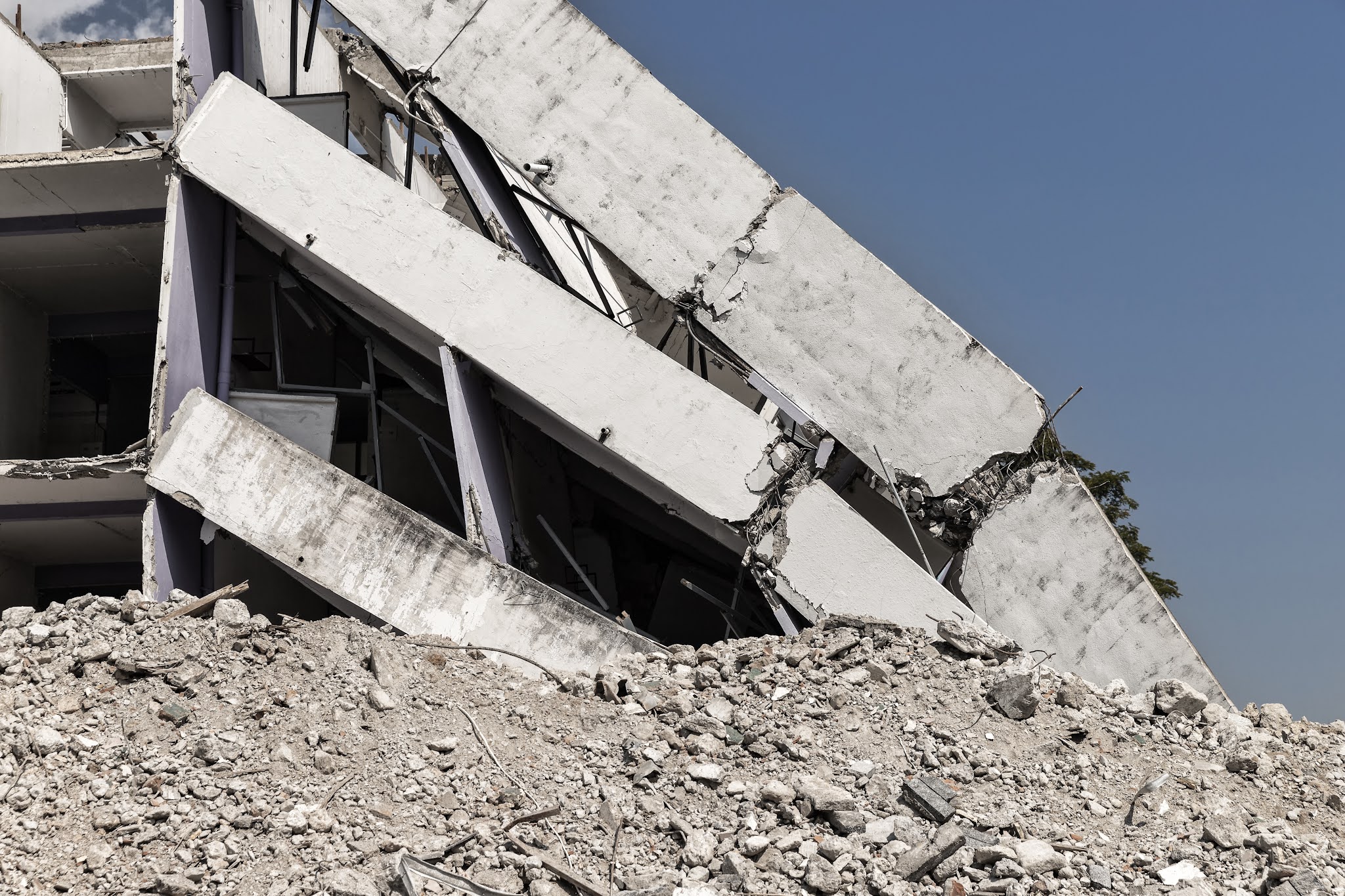
Earlier this year, we talked about the tragedy of the Surfside Condo collapse in Florida. Over the last few years, more catastrophic structural damage cases, concrete restoration, and progressive collapse cases have been in the news. Because of this, building owners are taking a closer look at their building, and lawmakers have also been making changes to prevent this type of tragedy from occurring.

Senate Bill 4-D (“S.B. 4-D”), which was enacted in May 2022 in response to the collapse of Champlain Towers South passed in May 2022, amends the Florida Condominium Act.

Read a summary of the bill on our website!

Since the Champlain Towers Collapse in Surfside Florida, we have had numerous requests to perform structural condition assessments.

How can you prevent a tragedy like this occurring at your property?

Prevent Collapse – IEI Concrete Restoration in Atlanta

Spalling and cracking concrete are deterioration problems that need to be addressed immediately. Early repairs are far less expensive than kicking the can down the road, allowing the repair costs to increase exponentially. When you work with Innovative Engineering, you can feel safe knowing your structure is secure.

IEI’s proven state of the art techniques provide a thorough condition assessment with consistent results. Contact IEI to inspect, report, repair and prevent future damage.

Monday, October 17, 2022

The Causes of Concrete Deterioration


Have you ever wondered about the severity of a crack in a concrete structure?

Does your structure currently have ponding, or standing water?

Don’t Ignore the Warning Signs of Structural Collapse

  • Leaks, standing water
  • Cracking or spalling, exposed rebar, signs of corrosion
  • Construction Defects


Investigating warning signs of deterioration and good structure maintenance can help you prevent a collapse, saving yourself on future expenses as well as protecting the community. 

Learn more about the importance of concrete restoration in Atlanta here.

Don’t Risk Collapse - IEI Concrete Restoration in Atlanta


Work with IEI concrete restoration in Atlanta to avoid costly repairs. We will let you know if we find any warning signs of degraded structural integrity. 

Contact us today to prevent future failure.

Monday, October 3, 2022

Don’t Wait Until it’s Too Late for Concrete Restoration


Structure collapses have a traumatic effect on the community.

Property damage, fatalities, life-altering injury, financial consequences, and loss of trust are all side effects when a building falls.

Regular Structure Inspections are Life Saving

Regular inspections and repairs prevent tragedies like the Surfside, Florida condominium collapse. Inspections early detection of cracks, rust, water damage, leaks, and code compliance issues.

Some Indications Your Structure Needs Restoration

  • Leaks
  • Exposed or Rusted Rebar
  • Cracked Concrete
  • Standing Water


Read more about the consequences of collapse here.

Don’t Ignore Damage - IEI Concrete Restoration in Atlanta


Avoid costly repairs when you work with IEI Concrete restoration in Atlanta. Our engineers specialize in restoration of concrete, masonry, steel, and wood structures and will let you know of any conditions that require immediate attention.

Saturday, January 15, 2022

Why Do You Need an Expert Historic Restoration Contractor?


Restoring or remodeling older commercial properties presents special challenges - lead and other hazardous building materials used before 1978, non-standard building materials and methods, and building practices that no longer meet code.

Working on these types of projects requires special knowledge, expertise, skills, equipment and material sources that remodeling contractors working on newer homes don’t generally have.

How can you be sure you’re hiring a reputable historic restoration contractor?

First, if there’s a local preservation review board in your area, they might have suggestions of restoration engineers and contractors that will work respectfully with historic properties. Additionally, look at the scale and scope of work local contractors typically do and see if it’s consistent with what you need to have done.

If the renovation is extensive, the engineer will verify that the property will physically and operationally handle the changes ordered up by your restoration engineer. An engineer can also inspect the building envelope and advise you on reconfiguring spaces that aren’t ADA compliant, and help you adhere to local ordinances about changes in a historic district or historic properties.

Learn more about the do's and don'ts of restoring historic brick buildings on our website!

Learn about the IEI Advantage Today!


IEI’s expertise is trusted by owners and property managers of all sizes, including some of the nation’s largest property portfolios. In addition to answering the request for advice, consulting, and peer reviews, IEI is sought after for their expertise in the form of educational speaking events for national organizations as well as articles in major national publications.

Contact us today to get a quote and see how we can help you keep the historic value of your building alive.

Monday, August 17, 2020

Avoid Costly Repairs by Maintaining Your Parking Structure

Indications You Need Parking Structure Restoration


  • Water leakage: Water and parking structures don’t mix! Leaking water is a clear sign that your structure needs repairs. The longer leaks are left unattended, the more expensive the consequences can become.
  • Ponding: Standing water is a huge issue in parking structures that can cause a tremendous amount of damage over time if not addressed early. Drain installation can prevent future, larger problems.
  • Expansion joint failure: Detecting expansion joint problems and reacting quickly to make repairs is very beneficial in the long run. Failed joints provide another avenue for water to reach the reinforcing steel and connector plates.
  • Horizontally or vertically cracked concrete: Concrete that has spalled or is cracking represents areas of potential structural damage that needs to be addressed. Cracks let water reach the structure’s reinforcing steel causing it to erode.
  • Exposed rebar: If you can see rebar, it deserves immediate attention. Introduced to water, rebar corrodes and expands up to eight times its original size. This is due to water penetration into the concrete.

Water is the number 1 cause of parking structure deterioration. Water-saturated concrete can freeze, expand, and spall. Combined with oxygen, water can also cause corrosion of the concrete reinforcing. Exposure to deicing salts accelerates this process. As reinforcing steel expands as it rusts, this process also leads to concrete spalling. Spalled concrete provides less cover or protection of the reinforcing which leads to further (and accelerated) deterioration if not repaired in a timely manner.

Saturday, August 1, 2020

Signs of Parking Structure Deterioration

Parking structures are an integral part of cities all across the country, providing visitors and their vehicles with a place to park and shelter from the elements. They also often provide access to offices and housing.

The challenging part of maintaining a parking structure is the onslaught of environmental stressors like moisture, expansion and contraction, carbonation, and everyday wear-and-tear. Vehicles regularly entering parking structures cause dynamic loads, and leave oil, water, and other debris behind, not to mention the salt and de-icers in winter climates that are left behind during inclement weather.

Facility managers have a tough job when it comes to maintaining parking garages and protecting them from deterioration. How can you avoid costly repairs?

Why Building Envelope Inspections Matter

Many building envelope problems develop slowly over time. A small water leak behind a wall assembly may not be visible until significant dam...